
Dental implants are the premier clinical standard for replacing missing teeth, offering a permanent solution that mimics the structure and function of natural tooth roots. Whether you are missing a single tooth or require a full-arch restoration, implants provide a stable foundation for a custom crown, bridge, or denture. At our Flower Mound office, we integrate dental implants into our comprehensive restorative services to restore both the aesthetics and the mechanical integrity of your smile.
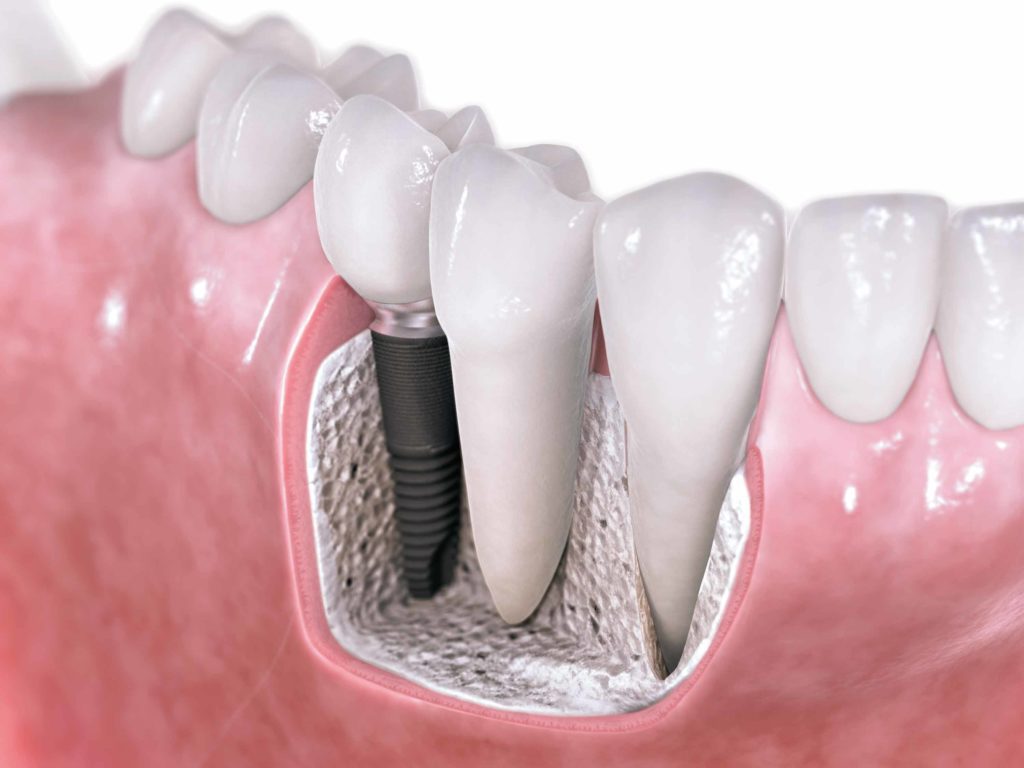
The Anatomy of a Dental Implant
A dental implant is a high-precision prosthetic consisting of three primary components designed for biocompatibility and durability:
- The Post: A small, screw-like cylinder made of medical-grade titanium that is surgically placed into the jawbone.
- The Abutment: A connector piece that sits atop the post to securely hold the final restoration.
- The Restoration: A custom-made crown, bridge, or denture designed to match the shade and contour of your natural teeth.
Advanced Implant Solutions
We utilize advanced diagnostics to determine the most effective implant type for your specific anatomy:
- Endosteal Implants: The most common variety, these are placed directly into the jawbone.
- Subperiosteal Implants: Ideal for patients with minimal jawbone height, these sit on top of the bone but under the gum tissue.
The Dental Implant Process in Flower Mound
The journey to a restored smile involves a systematic, multi-phase clinical approach to ensure long-term success and patient comfort.
Phase 1: Comprehensive Consultation and 3D Imaging
Success begins with a thorough evaluation. We utilize high-resolution digital imaging and 3D Cone Beam (CBCT) scans to assess the density of your jawbone and map the precise placement of the implant post. This diagnostic phase ensures we avoid vital structures like nerves and sinuses.
[Image of a 3D dental CBCT scan showing jawbone density and implant planning]
Phase 2: Foundational Enhancement (Bone Grafting)
For patients whose jawbone is not thick or strong enough to support an anchor, a bone graft may be necessary. By adding specialized grafting material—which can be synthetic, bovine, or donor-based—we encourage the body to regenerate natural bone. This creates a sturdy foundation, preventing implant failure.
Phase 3: Surgical Placement and Osseointegration
During the surgical phase, the titanium post is positioned within the jaw. Over the next 3 to 6 months, a biological process called osseointegration occurs. According to clinical data indexed by the National Institutes of Health (NIH), this is the direct structural and functional connection between living bone and the surface of a load-bearing artificial implant. This fusion is what allows the bone cells to attach directly to the titanium, providing a foundation as strong as a natural tooth root.
Phase 4: Final Custom Restoration
Once the site has healed, our team of experienced dentists takes precise impressions to design your permanent prosthetic. Using our advanced dental lab partnerships, we create a crown or bridge that provides a seamless, natural look.
Schedule Your Appointment Today
Our team of experienced dentists offers a comfortable, patient-centered experience with high-quality restorations. Dental implants could be the solution you’re looking for to replace missing teeth. Give us a call or schedule an appointment online.
✅ Clinically reviewed by our expert dental team | Updated March 2026